The ocean after dark, a different world entirely
As with all specialty diving applications, procedures are different from those associated with open water diving. The purpose of this course is to acquaint the open water diver with the procedures, techniques, and potential hazards associated with diving at night, or in limited visibility.
Becoming familiar with dive lights, night navigation, buddy system procedures, communications, buoyancy control, and interacting with nocturnal aquatic life, you will be able to safely enjoy night diving and explore a side of the ocean few people ever see.
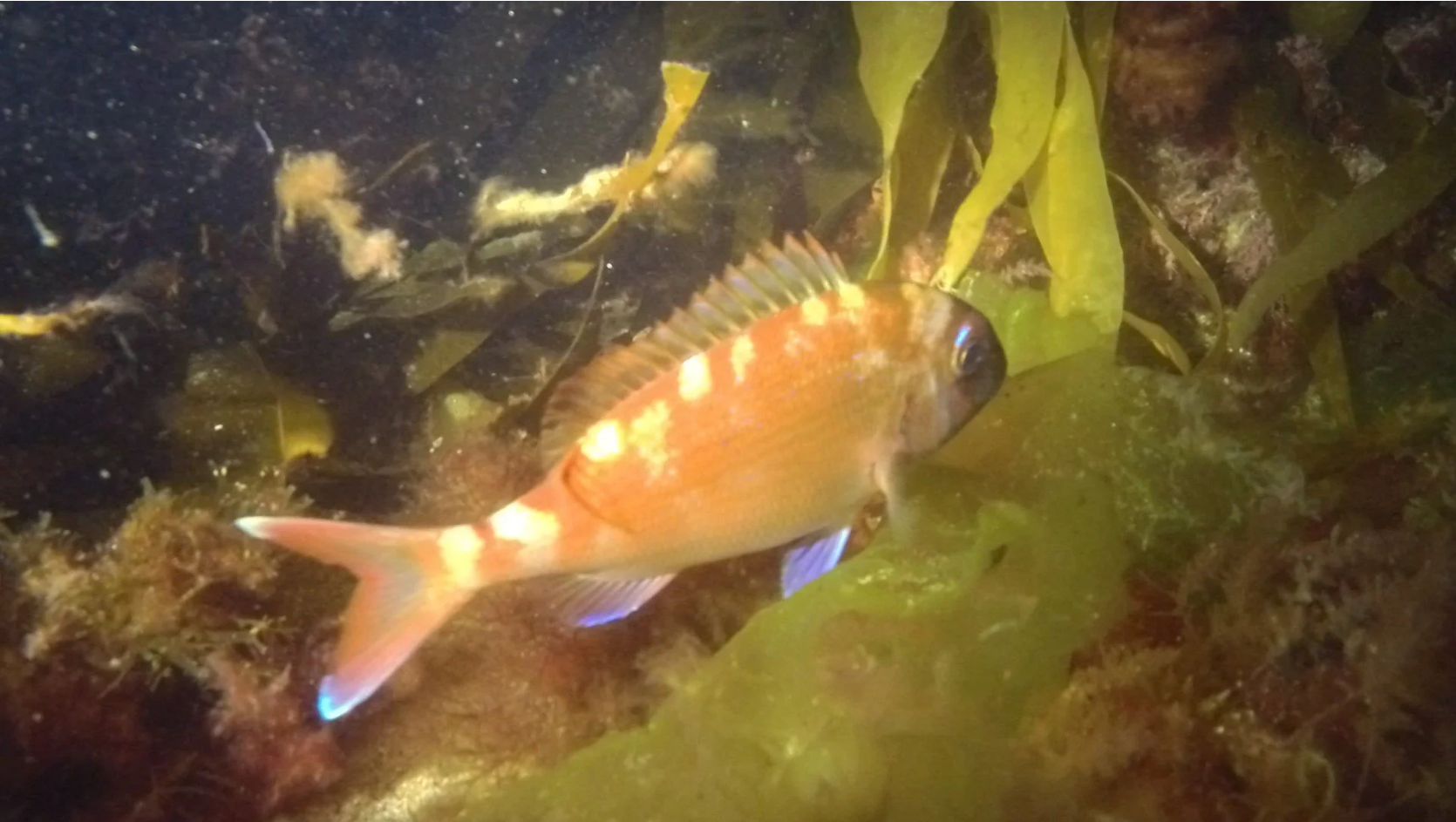
A Couche's Seabream, a rarely spotted spectacle
This colourful male is usually found in deeper water but will migrate to shallower sites at night to feed and breed. Night diving in Cornwall opens up encounters like these, species that simply aren't visible during the day.
Techniques, equipment & nocturnal awareness
- Why dive at night?
- Different aquatic life after dark
- Experience in limited visibility
- Special equipment, diving lights
- Importance of light and back-up
- Personal dive beacon
- Buddy system and buddy contact
- Communications underwater
- Night navigation, bottom contour & compass
- Boat and beach/lake navigation
- Marker light and strobe use
- Disorientation, with buddy and lost buddy
- Light failure procedures
- Buoyancy considerations
- Emergency procedures
- Nocturnal marine life
What you will demonstrate in the water
- 1Plan the dive and follow all safety procedures
- 2Enter and descend safely in darkness
- 3Remain submerged for at least 20 minutes
- 4Change direction several times while maintaining navigation
- 5Perform a two-minute swim without compass, then surface and reorient
- 6Descend and navigate to a specified point
- 7Use correctly: underwater light, SPG, compass, depth gauge, and dive computer
- 8Maintain buddy contact throughout, log the dive
What's in it for you?
- Dive at night and in limited visibility conditions covered during training
- Plan and execute night and low-visibility dives independently
- Counts towards a single specialty rating for the SDI Advanced Diver Development Program